
Beyond the Pyramids of Giza: Unearthing the Secrets of Saqqara’s Ancient Necropolis
When most people picture ancient Egypt, their minds drift straight to the Giza Plateau. But just 30 kilometers south of Cairo lies a site that actually predates Giza, spans over 3,000 years of continuous use, and birthed the very concept of the pyramid: the Necropolis of Saqqara.
Often called the “City of the Dead,” Saqqara isn’t just a graveyard. It’s an open-air archive of Egyptian architectural evolution, religious innovation, and daily life. From the world’s first monumental stone building to underground bull vaults and vibrant noble tombs, Saqqara has been quietly preserving Egypt’s soul for millennia. Let’s walk through its sands, step by step.
📜 A Timeline Carved in Stone & Sand
Saqqara served as the primary necropolis for Egypt’s ancient capital, Memphis. Its use spans dynasties, empires, and religious shifts. Here’s how the timeline breaks down:
- c. 3100–2686 BCE (Early Dynastic Period): Saqqara’s earliest royal burials appear. Flat, rectangular mastaba tombs dot the desert, marking the shift from pit graves to above-ground monuments.
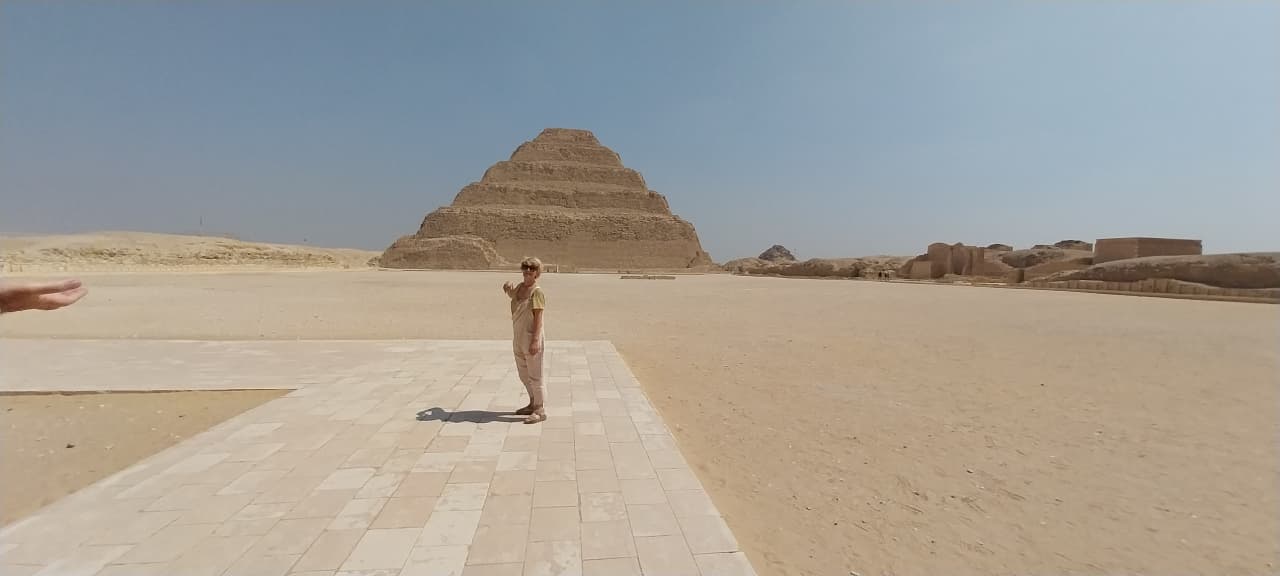
- c. 2650 BCE (3rd Dynasty): Pharaoh Djoser commissions the Step Pyramid, designed by his vizier Imhotep. This is the world’s oldest known colossal stone building and the architectural prototype for all later pyramids.
- c. 2686–2181 BCE (Old Kingdom): Saqqara becomes the royal burial ground for dozens of pharaohs and high officials. The complex expands with satellite pyramids, causeways, and mortuary temples.
- c. 2375–2345 BCE (5th Dynasty): The Pyramid of Unas is constructed. Its inner chambers contain the Pyramid Texts, the oldest known religious spells in human history, later forming the basis of the Book of the Dead.
- c. 2055–1650 BCE (Middle Kingdom): Royal focus shifts to other sites, but Saqqara remains a prestigious burial ground for nobles and priests.
- c. 1550–1070 BCE (New Kingdom): Elite tombs feature stunning painted reliefs depicting agriculture, craftsmanship, and religious rites.
- c. 700–332 BCE (Late Period): Saqqara experiences a religious revival. The Serapeum (burial site of the sacred Apis bulls) is massively expanded. Pilgrims flood the site to worship animal mummies and deified Imhotep.
- 332 BCE–4th Century CE (Ptolemaic & Roman Periods): The necropolis remains active, though traditional Egyptian burial practices gradually blend with Greco-Roman customs.
- 1979 CE: Saqqara is inscribed as a UNESCO World Heritage Site as part of “Memphis and its Necropolis – the Pyramid Fields from Giza to Dahshur.”
🏛️ Architectural Milestones You Can Still See
The Step Pyramid of Djoser (c. 2650 BCE)
Imagine six stacked mastabas, each smaller than the last, rising 62 meters into the desert sky. Imhotep’s design didn’t just revolutionize construction; it transformed how Egyptians conceptualized eternity. The surrounding enclosure wall, Heb Sed court, and dummy temples reveal a ritual landscape designed to sustain the king’s ka (spirit) forever.
The Mastaba Tombs of the Nobles
While pharaohs get the pyramids, Saqqara’s true artistic treasures lie in the tombs of officials. The Tomb of Ti (5th Dynasty) and Tomb of Mereruka (6th Dynasty) feature remarkably preserved reliefs showing bread-making, fishing, metalworking, and even hippopotamus hunts. These aren’t just decorative; they were magically functional, ensuring the deceased had everything needed in the afterlife.
The Serapeum & Animal Cemeteries
Beneath Saqqara’s surface lies a labyrinth of granite sarcophagi, some weighing up to 80 tons. These housed the Apis bulls, considered living manifestations of the god Ptah. Surrounding galleries contain millions of mummified ibises, baboons, cats, and dogs, reflecting the Late Period’s booming animal cult industry.
The Pyramid of Unas (c. 24th Century BCE)
Though heavily weathered on the outside, Unas’s burial chamber is a masterpiece of early Egyptian theology. The Pyramid Texts carved into its walls contain spells for resurrection, protection against demons, and the king’s ascent to the stars. It’s the earliest known corpus of Egyptian religious literature.
🔍 Why Saqqara Still Matters Today
Saqqara isn’t a relic locked in the past. It’s one of the most active archaeological sites in the world. Throughout the 2020s, Egyptian and international teams have uncovered:
Intact tombs with sealed burial shafts
Dozens of brightly painted wooden sarcophagi
A 4,500-year-old mummification workshop with resin pots, linen bandages, and embalming tools
Statues, amulets, and administrative papyri that rewrite our understanding of Old Kingdom bureaucracy
Each season brings new layers of history, proving that Saqqara is far from exhausted. In fact, Egyptologists estimate that only a fraction of the necropolis has been fully excavated.
🧳 Visiting Saqqara: Practical Tips
Location: About 30 km south of Cairo, easily reachable by car or organized tour.
Best Time to Visit: October to April for cooler weather. Early mornings avoid crowds and harsh sun.
What to See: Step Pyramid complex, Tomb of Ti, Pyramid of Unas, Serapeum, and the Imhotep Museum (excellent for context and recently renovated artifacts).
Guides: Highly recommended. A knowledgeable Egyptologist or licensed guide will decode the reliefs, explain the architectural evolution, and help you navigate the vast site safely.
Respect the Site: Flash photography is often restricted inside tombs to preserve pigments. Stay on marked paths, and never touch carved or painted surfaces.
🌅 Final Thoughts
Saqqara is where Egyptian civilization learned to build for eternity. It’s the bridge between mudbrick graves and soaring pyramids, between earthly rule and divine afterlife. While Giza may claim the spotlight, Saqqara holds the blueprint. Every mastaba, every pyramid text, every mummified ibis whispers the same truth: the ancient Egyptians didn’t just prepare for death—they curated immortality.
Have you walked the sands of Saqqara? Which ancient Egyptian site fascinates you most? Share your thoughts in the comments below, and don’t forget to subscribe for more deep dives into the world’s oldest wonders.
Note: All dates are approximate and reflect mainstream Egyptological consensus. Ongoing research and radiocarbon dating continue to refine our understanding of Saqqara’s timeline.